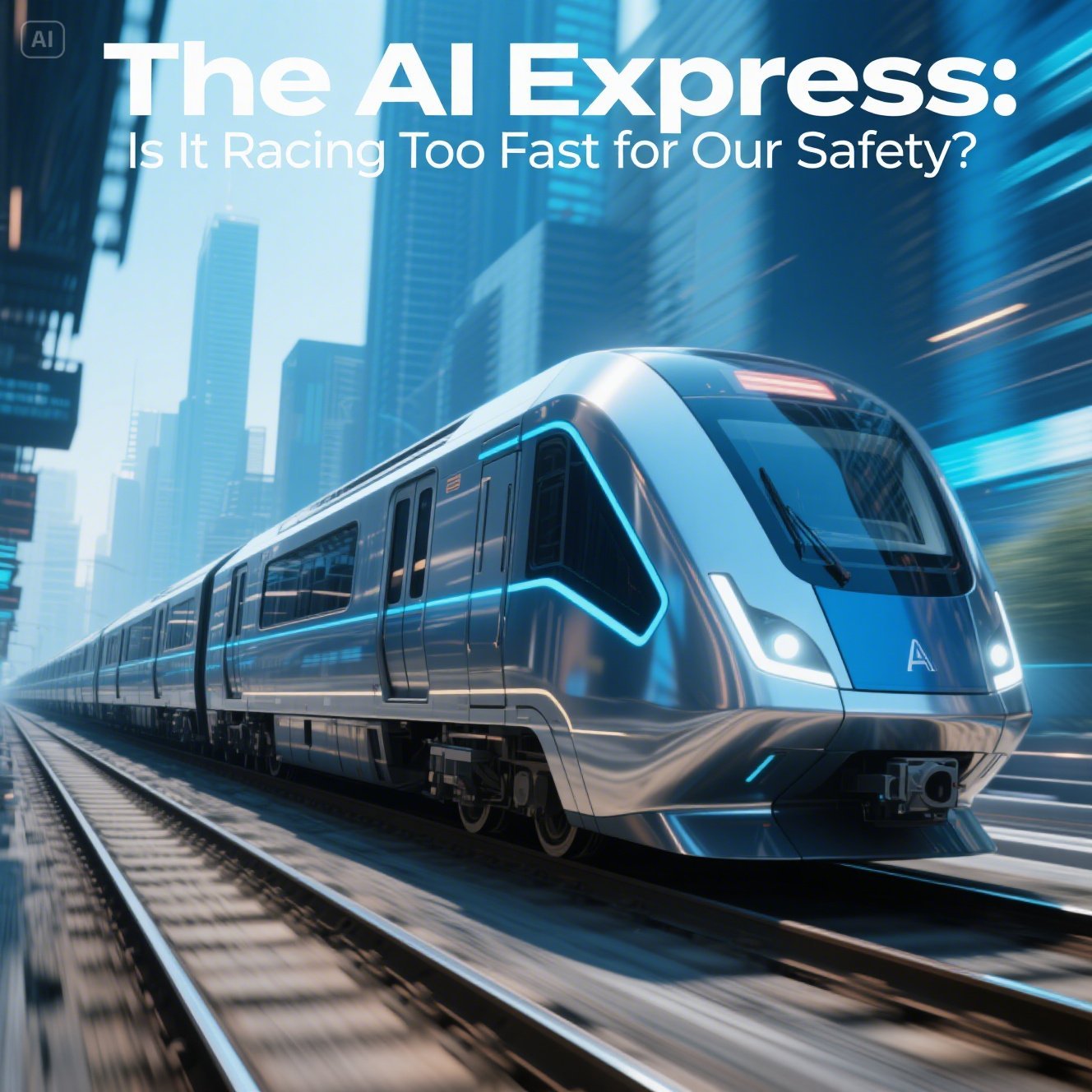
Artificial Intelligence is no longer confined to the pages of science fiction. It’s in our smartphones, our cars, our workplaces, and increasingly, influencing critical decisions that shape our lives. The pace of AI development is breathtaking, with new capabilities emerging almost daily. But this breakneck speed begs a crucial question: “Is AI being built too fast to be safe?”
This isn’t merely a philosophical debate; it’s a pressing ethical concern with profound implications for society.
The Innovation Frenzy and Its Blind Spots
The current landscape of AI development is often described as an “arms race” – a relentless pursuit of bigger, faster, and more powerful models. Companies are pouring billions into research, driven by intense competition and the promise of transformative profits. While this innovation undoubtedly brings benefits, it also creates significant blind spots:
- “Move Fast and Break Things” Mentality: In the rush to be first to market, thorough ethical considerations, rigorous safety testing, and comprehensive impact assessments can be sidelined. The mantra of rapid iteration, while effective for software development, is perilous when applied to technologies with societal-level consequences.
- Unforeseen Consequences: AI systems are incredibly complex, often operating as “black boxes” where even their creators struggle to fully understand their decision-making processes. Rapid deployment without adequate understanding of potential long-term impacts can lead to unintended and harmful outcomes, from subtle biases to catastrophic failures.
- Lack of Proactive Regulation: The legal and ethical frameworks needed to govern AI are struggling to keep pace with its rapid evolution. Policymakers are often reacting to problems after they emerge, rather than establishing robust guardrails beforehand. This leaves a regulatory vacuum where companies can operate with limited oversight.
The Ethical Minefield: Key Concerns of Rapid AI Development
The speed of AI development exacerbates several core ethical concerns:
- Bias and Discrimination: AI systems learn from data. If this data reflects existing societal biases (e.g., historical discrimination in hiring or lending), the AI will not only learn these biases but can also amplify them, leading to discriminatory outcomes in areas like healthcare, criminal justice, and employment. The rush to deploy means less time for meticulous data curation and bias mitigation.
- Safety and Reliability: From autonomous vehicles to AI-powered medical diagnostics, the stakes are incredibly high. If AI systems are rushed to market without exhaustive testing in diverse real-world scenarios, errors can have life-threatening consequences. The question of who is accountable when an AI system makes a deadly mistake becomes incredibly complex in a rapidly evolving, often opaque development environment.
- Lack of Transparency and Explainability: Many advanced AI models, particularly deep learning networks, are notoriously difficult to interpret. This “black box” problem makes it challenging to understand why an AI made a particular decision. In critical applications, this lack of transparency erodes trust and hinders accountability, especially when a flawed or biased decision needs to be challenged or corrected.
- Privacy and Surveillance Risks: The more powerful AI becomes, the more data it requires. The rapid collection and processing of vast amounts of personal information by AI systems raise significant privacy concerns. Without sufficient time to implement robust data protection measures and ensure truly informed consent, individuals’ data can be exposed, misused, or exploited for pervasive surveillance.
- Job Displacement and Economic Inequality: While AI promises productivity gains, its rapid adoption can lead to significant job displacement across various sectors. Without thoughtful societal planning, retraining programs, and potentially new economic models, this swift automation could exacerbate economic inequality and societal unrest.
- Malicious Use and Weaponization: The same powerful AI capabilities that can drive progress can also be weaponized. Rapid advancements in areas like deepfakes, autonomous weapons, and sophisticated cyberattack tools raise alarming questions about misuse by malicious actors or even in large-scale conflicts. The speed of development leaves little room to build in robust safeguards against such abuse.
Pumping the Brakes: Prioritizing Safety Over Speed
To ensure AI serves humanity rather than harms it, a shift in mindset is urgently needed. We must collectively prioritize responsible AI development, even if it means a slightly slower pace. This involves:
- Embedding Ethics from the Start: Ethical considerations should not be an afterthought but integrated into every stage of AI design, development, and deployment.
- Rigorous Testing and Validation: Extensive testing, including real-world simulations and adversarial testing, is crucial to identify vulnerabilities and mitigate risks before deployment.
- Transparency and Explainability by Design: Developers should strive to create AI systems whose decisions can be understood and explained, particularly in high-stakes applications.
- Robust Regulation and Governance: Governments and international bodies must work collaboratively to develop and enforce comprehensive AI regulations that address safety, privacy, bias, and accountability.
- Public Engagement and Education: Fostering public understanding of AI’s capabilities and risks is essential for informed discourse and democratic oversight.
- Interdisciplinary Collaboration: Bringing together AI researchers, ethicists, legal experts, social scientists, and policymakers is vital to navigate the complex challenges.
The potential of AI to revolutionize our world for the better is immense. However, if we continue to build AI too fast to be safe, we risk creating a future riddled with unintended consequences and ethical dilemmas that could far outweigh any benefits. It’s time to pump the brakes, reflect, and build AI with a deliberate focus on safety, fairness, and human well-being.
Discover more from AIWiredDaily
Subscribe to get the latest posts sent to your email.