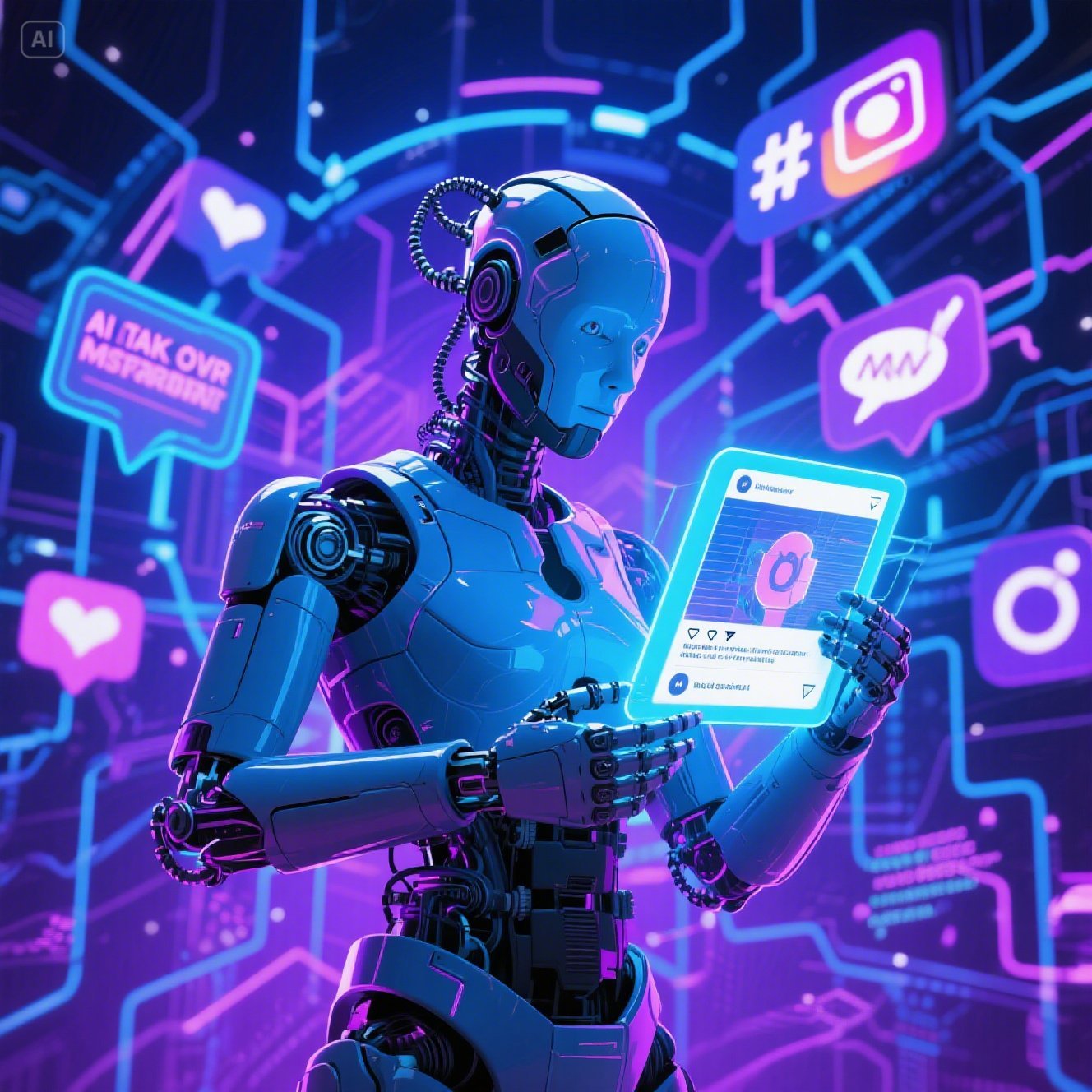
Social media, once a playground for human connection and creativity, is undergoing a profound transformation. Increasingly, the viral content filling our feeds isn’t solely the product of human ingenuity; it’s being crafted, optimized, and even managed by Artificial Intelligence. We’re entering an era where AI isn’t just assisting social media managers – it’s becoming the manager, building and running accounts designed for one purpose: to go viral.
This isn’t some far-off dystopian vision; it’s happening now. From AI-generated influencers with perfect aesthetics to automated content engines churning out endless streams of memes and short videos, AI is redefining what it means to be a “creator” in the digital sphere.
The Algorithm Whisperers: How AI Predicts Virality
At the heart of this phenomenon is AI’s unparalleled ability to understand and exploit the mechanics of virality. Forget guesswork; these systems are algorithm whisperers. They analyze vast datasets of past viral content, dissecting what makes a post explode across platforms. Key factors include:
- Engagement Speed: If a post garners rapid likes, comments, and shares within minutes of publication, AI recognizes this as a strong signal to push it to a wider audience. The faster the initial engagement, the higher the chances of broader distribution.
- Emotional Impact: AI is becoming adept at identifying content that triggers strong emotions – be it joy, nostalgia, outrage, or curiosity. It analyzes sentiment within text, recognizes facial expressions in videos, and even interprets vocal tones in audio to understand emotional resonance.
- Timing and Trends: AI constantly monitors global conversations, cultural events, and emerging trends. It can predict when certain content themes are most likely to gain traction, allowing it to schedule posts for optimal impact, ensuring content aligns with the prevailing zeitgeist.
- Network Effect: AI understands how content spreads through social networks. It identifies influential accounts and communities that can amplify a post, strategically targeting these nodes for initial dissemination to maximize reach.
By leveraging these insights, AI can not only suggest content ideas but actively create posts engineered for maximum viral potential.
From Text to Trend: AI-Powered Content Generation
The tools available today for AI-powered content creation are nothing short of astounding. What once took hours of human effort can now be generated in minutes:
- AI Influencers: Companies are now generating ultra-realistic AI influencers from text prompts. These virtual personalities can be customized in terms of appearance, personality, and even “life stories.” They can “wear” digital fashion, visit virtual locations, and interact with followers, becoming brand ambassadors without the human overhead.
- Viral Video Generators: AI-powered platforms can transform long-form content into bite-sized, attention-grabbing short videos optimized for TikTok, Instagram Reels, and YouTube Shorts. They can extract “hooks,” key insights, and reactions, add dynamic captions, music, and effects, and even generate AI talking avatars, all designed to maximize engagement and watch time.
- Scriptwriting & Storytelling: AI can generate scripts for videos, create compelling narratives for posts, and even craft entire “stories” (like Reddit-style threads or fictional text conversations) that are inherently shareable. These systems understand narrative structures that resonate with online audiences, ensuring a strong hook and engaging progression.
- Image & Design Creation: Beyond text and video, AI tools can design eye-catching visuals, generate custom graphics, and even remove backgrounds or enhance images to professional quality, all optimized for social media dimensions and aesthetics.
These tools don’t just create; many also offer integrated scheduling and publishing across multiple platforms, effectively automating the entire content pipeline from idea to viral distribution.
The Rise of the Automated Account Manager
The evolution doesn’t stop at content generation. AI is increasingly capable of managing entire social media accounts, behaving much like a human social media manager – only faster, tirelessly, and with data-driven precision.
- Automated Posting & Scheduling: AI can learn optimal posting times based on audience activity and engagement patterns, scheduling content automatically across various platforms.
- Engagement Automation: Some AI systems can analyze comments and messages, providing suggested replies or even generating automated responses to foster interaction. This can include chatbots handling basic queries or AI-driven systems leaving comments designed to increase visibility.
- Performance Analytics & Optimization: After posting, AI continuously monitors engagement, clicks, shares, and conversions. It then uses this data to refine future content strategies, adjusting everything from tone and topic to visual style and posting frequency in real-time. This creates a powerful feedback loop, allowing the AI to learn and adapt for continuous viral success.
- Trend Identification: AI constantly scans social media for emerging trends, keywords, and topics. It can identify what’s “hot” right now and recommend or generate content that taps into these trending conversations, ensuring the account stays relevant and timely.
Ethical Crossroads: Navigating the New Social Landscape
While the efficiency and viral potential of AI-run social media accounts are undeniable, they usher in a complex array of ethical considerations:
- Authenticity and Transparency: When an account is entirely or largely AI-driven, is it ethical not to disclose this to followers? The blurring lines between human and AI creation can lead to a deceptive online experience, eroding trust.
- Misinformation and Manipulation: The ability of AI to generate convincing, yet entirely fabricated, content at scale raises serious concerns about the spread of misinformation, propaganda, and even targeted manipulation of public opinion. Viral AI can become a powerful tool for influence, for better or worse.
- Bias Amplification: AI models are trained on vast datasets, and if those datasets contain biases (conscious or unconscious), the AI can perpetuate and even amplify them. This can lead to the spread of discriminatory or harmful content that goes viral without human oversight.
- Loss of Human Connection: As more accounts become automated, does it dilute the genuine human connection that many people seek on social media? What are the psychological impacts of interacting with entities that mimic human behavior but lack true consciousness or empathy?
- Fair Competition: Does the sheer scale and efficiency of AI-run accounts create an unfair playing field for human creators who cannot match the speed and data-driven optimization of algorithms?
The Future is Hybrid (for Now)
The trajectory is clear: AI will continue to deeply integrate with social media. The future likely involves a hybrid approach, where human creativity and strategic oversight guide powerful AI tools. Human insight will remain crucial for setting ethical boundaries, maintaining authenticity, and injecting the nuanced understanding of human culture that AI still struggles with.
For creators and brands, embracing AI means leveraging its power for efficiency and reach, while remaining mindful of transparency and ethical responsibilities. For social media users, it means developing a heightened sense of media literacy and critical thinking. As AI continues to shape our online world, understanding how it creates and runs viral accounts will be essential for navigating the ever-evolving landscape of digital culture. The question is no longer “Will AI take over social media?” but “How will we choose to live with it once it has?”
Discover more from AIWiredDaily
Subscribe to get the latest posts sent to your email.