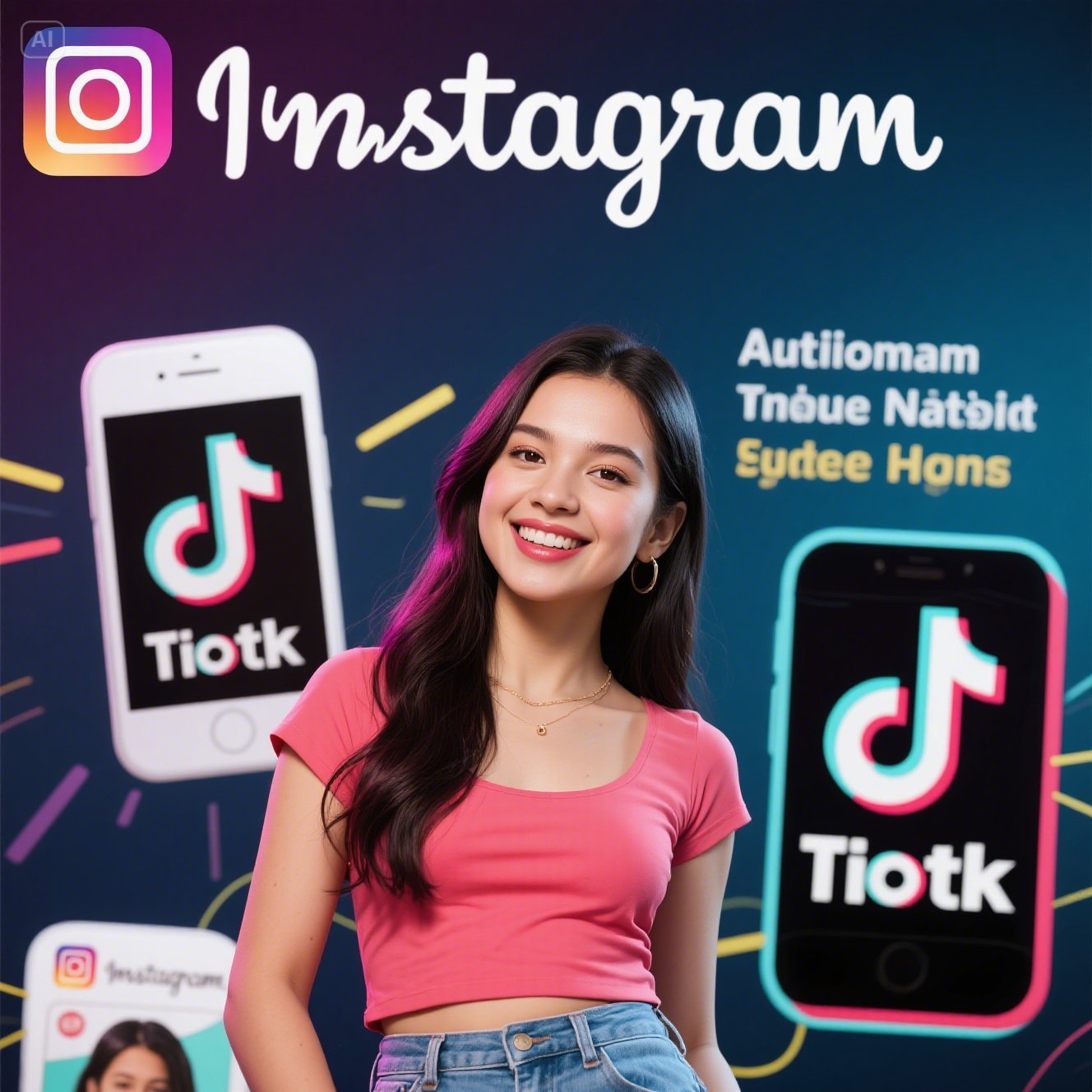
Step aside, human influencer. There’s a new breed of social media sensation taking over Instagram, TikTok, and beyond: the AI influencer. These meticulously crafted digital personas, brought to life by advanced AI and CGI, are not only racking up millions of followers but are also signing lucrative brand deals with major companies. Welcome to the uncanny valley of marketing, where the most sought-after models don’t even have a pulse.
It sounds like science fiction, but it’s very much our current reality. From the fashion-forward Lil Miquela to the hyper-realistic Shudu Gram, these virtual models are blurring the lines between the digital and the real, proving that authenticity in the age of AI is a far more fluid concept than we once imagined.
The Allure of the Artificial: Why Brands Are Investing
Why are brands, from luxury fashion houses like Prada and Balmain to beauty giants like Fenty, flocking to collaborate with entities that don’t exist in the physical world? The reasons are compelling and often address the pain points associated with human influencer marketing:
- Total Control & Consistency: Unlike human influencers who can have personal scandals, shifting opinions, or simply a bad day, AI influencers offer unparalleled control. Every pose, every caption, every brand message is meticulously crafted and approved. This ensures a consistent brand image and eliminates the risk of unforeseen controversies.
- Always Available, Never Tired: AI influencers don’t need sleep, vacations, or breaks. They can “work” 24/7, appearing in multiple campaigns simultaneously across different time zones. This 24/7 availability and scalability are incredibly attractive for global brands.
- Cost-Effectiveness (Long-Term): While the initial investment in creating a high-fidelity AI influencer can be substantial, the long-term operational costs are often lower than continually paying human supermodels or A-list celebrities. There are no travel expenses, no personal appearance fees, and no elaborate on-set demands.
- Niche & Novelty Appeal: AI influencers often cater to specific, tech-savvy demographics, creating a unique buzz and generating significant media attention due to their novelty. They tap into a fascination with the future and the endless possibilities of AI, which resonates with forward-thinking brands.
- Risk Mitigation: The fear of a human influencer making an off-brand comment or engaging in problematic behavior that could damage a brand’s reputation is a constant concern for marketers. AI influencers, being entirely programmable, eliminate this risk.
Behind the Pixels: How They’re Made (and Marketed)
The creation of these digital stars is a blend of artistry and cutting-edge technology. It involves:
- CGI (Computer-Generated Imagery): Skilled digital artists use advanced 3D modeling and animation software to sculpt the visual appearance of these influencers, focusing on hyper-realistic details like skin texture, hair, and clothing.
- AI & Machine Learning: Beyond aesthetics, AI powers their “personalities” and interactions. Natural Language Processing (NLP) allows them to “converse” with followers, respond to comments, and even generate their own captions and stories. Generative Adversarial Networks (GANs) are crucial for creating new, realistic images and videos of the influencer.
- Human Teams: While the models themselves are AI, a human team typically stands behind them. This includes digital artists, writers, strategists, and marketing professionals who manage the persona, create storylines, interact with followers (sometimes through automated means, sometimes manually), and secure brand partnerships. This “Wizard of Oz” approach ensures the AI influencer maintains a coherent and engaging presence.
- Data-Driven Optimization: These teams, often powered by AI analytics, constantly monitor engagement, trending topics, and audience sentiment to fine-tune the influencer content strategy, ensuring maximum viral potential and brand alignment.
Viral Success Stories: From Lil Miquela to Lu
The landscape of AI influencers is growing rapidly, with several notable figures leading the charge:
- Lil Miquela: Perhaps the most famous AI influencer, Miquela Sousa, is a 19-year-old Brazilian-American model and musician with millions of followers. She has collaborated with major brands like Calvin Klein, Prada, and Dior, appeared in music videos, and even released her own songs. Her “life” is a carefully constructed narrative, complete with friendships, rivalries, and social causes she supports.
- Shudu Gram: Hailed as the “world’s first digital supermodel,” Shudu was created by photographer Cameron-James Wilson. Her photorealistic appearance has led to partnerships with brands like Fenty Beauty and Balmain, challenging traditional beauty standards in the fashion industry.
- Lu do Magalu: From Brazil, Lu is a virtual assistant for the retail giant Magalu. Starting as a helpful chatbot, she evolved into a full-fledged influencer with tens of millions of followers, appearing in commercials, reviewing products, and even campaigning against domestic violence. Her success highlights how brands can integrate AI personas directly into their marketing and customer service.
- Knox Frost: Breaking the mold of female AI models, Knox Frost is a male AI influencer focusing on fashion and lifestyle, appealing to a diverse audience and securing his own set of brand collaborations.
The Ethical Murk: Authenticity, Bias, and Trust
While the rise of AI influencers is a testament to technological advancement and marketing innovation, it also presents significant ethical challenges:
- Authenticity and Transparency: Should followers be explicitly informed that they are interacting with an AI? The line between genuine connection and sophisticated manipulation becomes incredibly thin, potentially eroding trust when the “influencer” isn’t a real person with genuine experiences.
- Unrealistic Standards & Bias: Many AI influencers are designed with impossibly flawless appearances, potentially exacerbating existing issues around unrealistic beauty standards and body image, especially for younger, impressionable audiences. Furthermore, if the AI is trained on biased datasets, it can inadvertently perpetuate stereotypes or promote harmful content.
- Accountability: Who is responsible when an AI influencer spreads misinformation or engages in problematic behavior? The legal and ethical frameworks around AI-generated content are still evolving, leaving a void in accountability.
- Exploitation of Culture/Identity: When an AI influencer is created to represent a specific ethnicity or cultural group without any genuine lived experience or representation from that community in its creation or management, it raises questions of cultural appropriation and superficial diversity.
The Future of Influence: A Hybrid Reality
AI influencers are not a fleeting trend; they are a powerful, evolving force in social media marketing. As the technology behind them becomes even more sophisticated, their presence will become increasingly pervasive.
The future of influence will likely be a hybrid one, where human creativity and AI capabilities intertwine. Brands will continue to leverage AI for its efficiency, control, and ability to generate highly optimized content. However, the unique human element – genuine emotion, spontaneity, personal experience, and the capacity for true connection – will remain invaluable.
For consumers, the era of AI influencers demands a higher level of media literacy. It’s crucial to question the source, understand the technology, and critically evaluate the content we consume. The next viral sensation on your feed might just be an algorithm with a perfect smile and a lucrative brand deal. And in the world of social media, that’s no longer surprising – it’s just business as usual.
Discover more from AIWiredDaily
Subscribe to get the latest posts sent to your email.