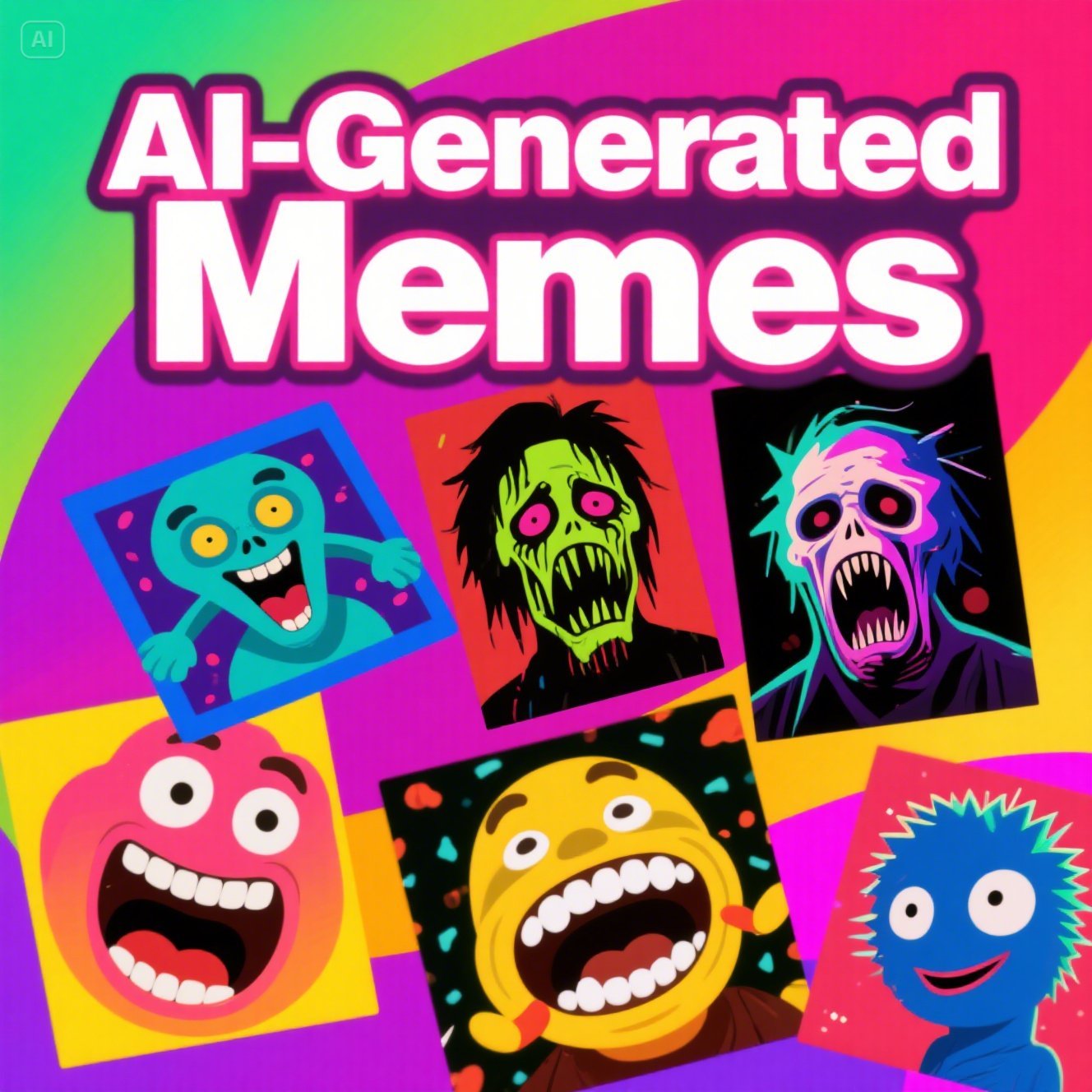
Memes are the internet’s universal language – a rapid-fire cultural shorthand that can convey complex emotions, pop culture references, and shared experiences in a single image and a few words. But what happens when the creators of these digital nuggets of humor aren’t human? Enter AI-generated memes, a fascinating and often bizarre realm where algorithms try their hand at comedy, sometimes with hilarious success, and other times with unsettling results that delve into the uncanny and the absurd.
We’ve moved beyond simple meme generators that just slap text on a pre-existing image. Modern AI meme creators, powered by advanced machine learning models, can generate entirely new images, conceptualize novel scenarios, and even attempt to mimic human humor and cultural trends. The results are flooding our feeds, making us laugh, scratch our heads, and occasionally, shiver.
The Funniest: When AI “Gets It” (Sort Of)
The funniest AI-generated memes often arise when the algorithm attempts to understand human absurdity and lands somewhere strangely close, or brilliantly off. They tap into universal experiences or common internet tropes in unexpected ways.
- Relatable Glitches: Many of the funniest AI memes stem from the inherent “glitches” of AI image generation. Think of images where human hands have six fingers, or faces are subtly distorted in a way that’s just wrong. These imperfections, when paired with a caption commenting on, say, a tough Monday morning or a “brain fog” moment, can be incredibly relatable and hilarious. The AI is failing, but in a way that perfectly encapsulates a human feeling.
- Surreal Scenarios: AI often excels at generating truly surreal and nonsensical imagery. When these bizarre visuals are combined with deadpan or self-referential captions, the humor can be fantastic. Imagine a dog wearing a tiny hat piloting a spaceship made of cheese, captioned “Me trying to navigate adulting.” The sheer absurdity is what makes it work, and AI is a master of the absurd.
- Deep-Fried Absurdity: AI can take existing meme formats and push them into new, distorted territories, often resulting in “deep-fried” or heavily compressed aesthetics that add another layer of ironic humor. The AI’s inability to perfectly replicate human-made art becomes the joke itself.
- Meta-Humor: Some of the most clever AI memes are self-aware, making jokes about AI itself. You’ll see memes depicting AI struggling with basic tasks, or complaining about its “existence.” These meta-commentaries on the nature of AI often resonate with tech-savvy audiences.
These funny instances often highlight the surprising capacity of AI to learn patterns of humor, even if its understanding is purely statistical rather than genuinely empathetic. It’s like a highly intelligent parrot that can string together incredibly witty sentences without truly understanding their meaning, making its “jokes” even more endearing.
The Scariest: When AI Gets Too Real (or Too Unknowable)
Then there’s the other side of the coin: the AI-generated memes that send a chill down your spine. These often venture into the uncanny, the existential, or the subtly disturbing, tapping into our anxieties about the unknown power of artificial intelligence.
- The Uncanny Valley Visage: While sometimes funny, the subtle distortions in AI-generated faces or bodies can be genuinely creepy. When a figure looks almost human, but not quite, our brains register something is profoundly wrong, leading to discomfort rather than laughter. These images often go viral for their unsettling quality, reminding us of AI’s potential to create simulated realities that are just off-kilter enough to be disturbing.
- Existential Dread & The Shoggoth: A prominent “scary” AI meme is the “Shoggoth.” Originating from H.P. Lovecraft’s cosmic horror, Shoggoths are amorphous, multi-eyed, sentient blobs that were once enslaved but eventually rose against their creators. In the context of AI, the Shoggoth has become a visual metaphor for the unknowable, vast, and potentially uncontrollable nature of advanced AI models like large language models (LLMs). Memes featuring a smiling human face poorly pasted onto a chaotic, monstrous Shoggoth body often encapsulate the anxiety that beneath the friendly interface of AI lies something vast, alien, and beyond our full comprehension.
- The “AI Time Traveler” Meme: These memes often feature intentionally creepy, distorted AI-generated images or short videos, often accompanied by eerie, distorted audio. The premise is usually that these are “leaked” images or sounds from the future, created by a malevolent AI or depicting a post-human world. They play on the fear of AI-driven dystopias and the erosion of our reality.
- Disturbing Narratives: Beyond just images, AI can generate short, unsettling text snippets or “stories” that, when combined with appropriate visuals, create genuinely creepy memes. These can be unsettling “conversations” with chatbots that break the fourth wall, or AI-written prophecies of a bleak future.
These scary memes are often less about intentional humor and more about collective anxiety. They serve as a visual manifestation of the public’s concerns about AI safety, control, and the potential for the technology to evolve in ways we don’t understand or can’t predict.
The Ethical Murk of the Meme Machine
The rise of AI-generated memes isn’t just about laughs or scares; it raises important ethical questions:
- Authenticity and Misinformation: As AI gets better at generating convincing images and text, the line between genuine and fabricated content becomes blurrier. This can make it easier to spread misinformation or propaganda in the guise of humor, which can go viral quickly and be hard to debunk.
- Copyright and Data Scrapes: Much of the AI’s ability to generate memes comes from being trained on vast datasets of existing images and text, often scraped from the internet without explicit consent or compensation to the original creators. This raises significant intellectual property and copyright concerns.
- Bias Amplification: If the data AI is trained on contains biases, those biases can be amplified and reflected in the memes it generates, potentially perpetuating stereotypes or creating offensive content.
- “Low Effort” vs. New Art Form: There’s an ongoing debate about whether AI-generated memes are “low effort” and devalue human creativity, or if they represent a new form of digital art and expression, allowing anyone to become a “meme artist.”
AI-generated memes are a microcosm of the broader AI revolution: simultaneously wondrous, unsettling, and rapidly changing. They are a testament to how quickly AI is permeating popular culture, not just as a tool, but as a participant in our shared online experience. Whether they make you burst out laughing or send shivers down your spine, one thing is certain: AI memes are here to stay, constantly evolving and challenging our perceptions of humor, art, and even reality itself.
Discover more from AIWiredDaily
Subscribe to get the latest posts sent to your email.